
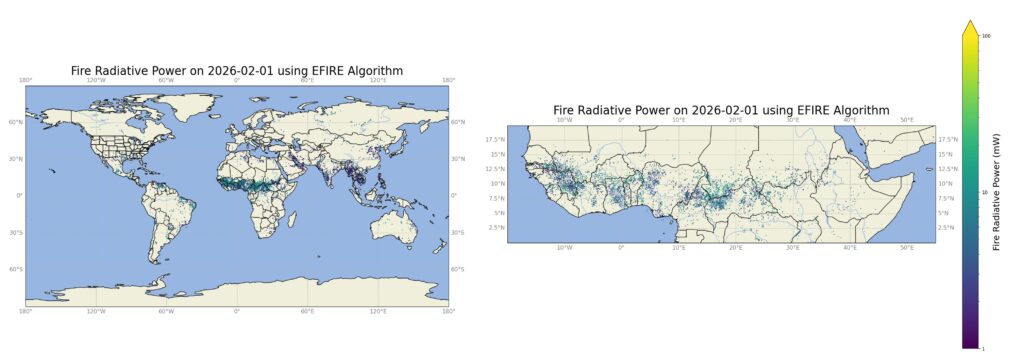
CSS provides fire detection support to the Atmospheric Science and Technology Applications team with NOAA’s National Environmental Satellite, Data, and Information Services. CSS Surface Characteristics Scientist serves on the Fire Emissions and Fire Detection teams, providing data manipulation, algorithm development, and performance evaluation for the system. This ensures fast and reliable satellite data to stakeholders, as well as researchers in the long-term. The CSS surface characteristics scientist will transition to Visible Infrared Imaging Radiometer Suite (VIIRS)-Based Next Generation Fire System data retrieval and validation for the U.S. Department of the Interior federal land fire cases. This system is an experimental satellite-based fire detection algorithm developed by the University of Wisconsin. It uses multi-band imaging capabilities to obtain high-resolution atmospheric imagery and generate a variety of applied products, one of which includes visible and infrared imaging for detecting fires, smoke, and atmospheric aerosols. CSS will be working on location accuracy of fire detection for the Next Generation Fire System.
See More CSS Insights
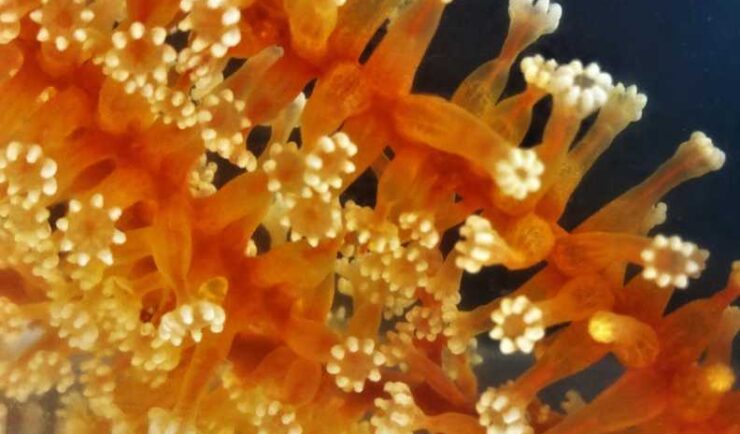
Collecting and Studying Deep-Sea Coral
Three of our staff supporting NOAA’s National Centers for Coastal Ocean Science joined a team of nine other scientists on a 12 day expedition to collect deep-sea coral samples in the Gulf of Mexico.
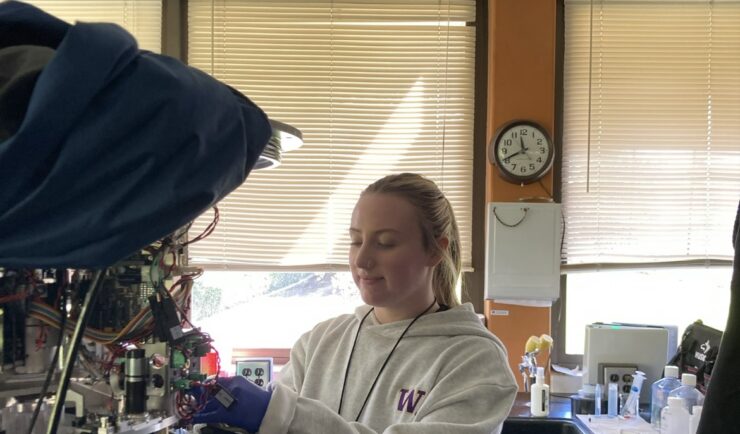
Monitoring Algal Blooms for Harmful Toxins
CSS employee owners support NOAA’s National Centers for Coastal Ocean Science (NCCOS) Harmful Algal Blooms (HAB) Sensor Development Team in their efforts to detect and monitor these harmful algal blooms in coastal waters where they are likely to occur. HAB monitoring is critical for detecting harmful toxins produced by some algae. When present in over…

Overcoming COVID-19 Challenges
Great job to our team supporting our contract with the U.S. General Services Administration on assisting the client with conducting a year’s worth of environmental, health, and safety surveys in just six months! Due to limitations with COVID-19, the team was unable to conduct their surveys on their usual timeline and instead had to work…