
- Success Stories
- Emergency Preparedness & Response
Continued Analysis of Contaminants from East Palestine Train Derailment
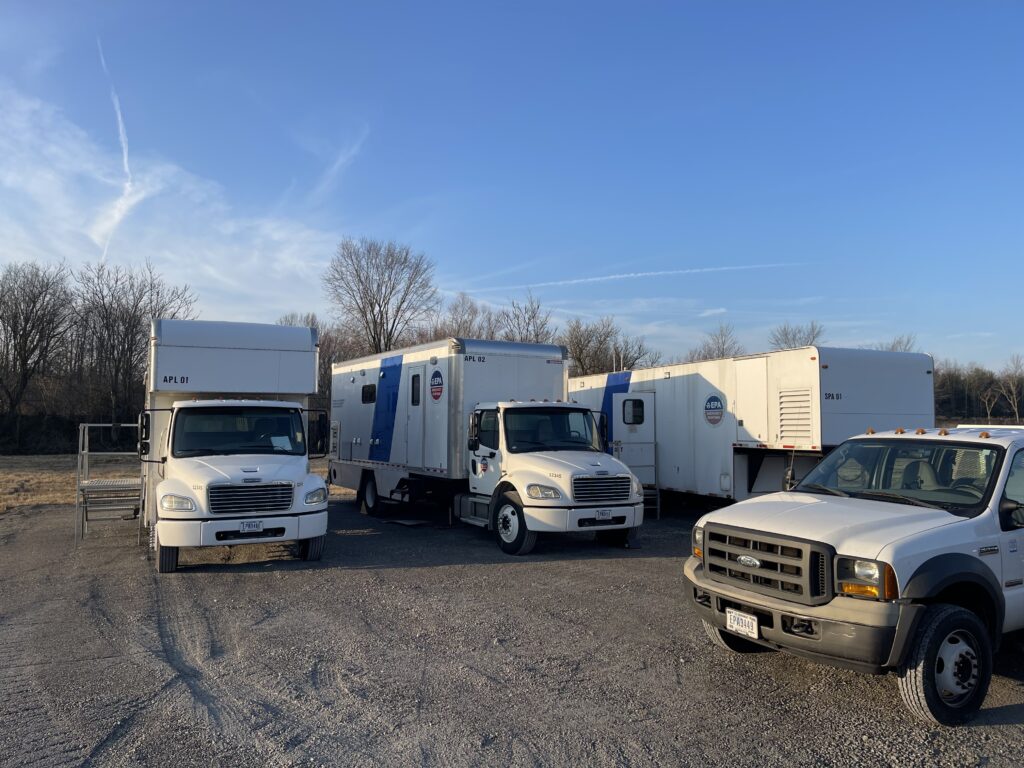
In February 2023, a freight train carrying hazardous materials derailed in East Palestine, Ohio spilling chemicals that contaminated surrounding soil, water, and the air. Several Portable High-throughput Integrated Laboratory Identification Systems (PHILIS) – the U.S. Environmental Protection Agency’s (EPA) suite of mobile laboratories designed to provide on-site analysis of chemical agents – and staff were mobilized to the site following the accident to conduct analysis of various contaminated media. The CSS PHILIS team provided immediate response and continued to support to provide on-site recovery. The team demobilized in late June 2023 and continue to conduct analyses of clearance samples from the PHILIS base of operations.
On November 17, 2025, the EPA tasked the CSS PHILIS team in Edison, New Jersey with receiving and testing for 2-Butoxyethanol in ground water samples in follow-up from the train derailment project in 2023. CSS staff immediately began developing a method in SPA01 (a sample preparation laboratory where collected samples are prepared by extraction or other means prior to chemical analysis) and APL02 (a chemical analysis laboratory, dedicated to the testing for organic semivolatile compound contaminants in environmental samples). After conducting quality assurance/quality control testing, the team was ready to receive samples and begin analyzing as of December 2, 2025. The first samples were received on December 11, 2025, and the final samples were received on February 13, 2026. CSS chemists and managers worked diligently to turn the data over within a 24-hour period for review by EPA Region 5. PHILIS Edison laboratories have analyzed a total of eight work orders, and 50 aqueous samples. All analytical results were below the established reporting limits.
Learn more about this ongoing effort.
See More CSS Insights
Monitoring Air Quality in California’s San Joaquin Valley
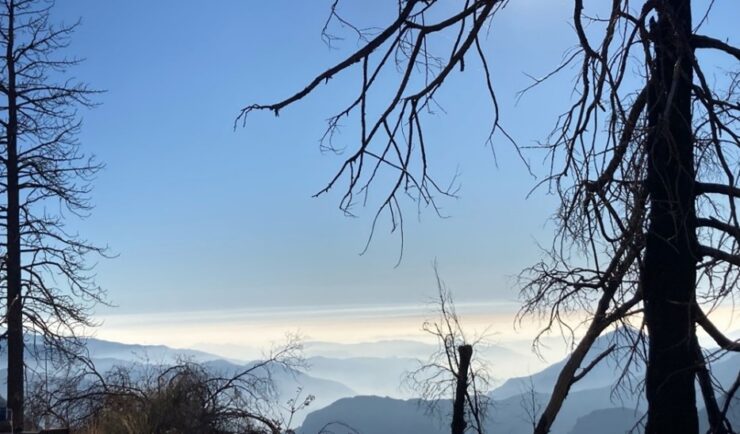
CSS employee owners supported the deployment and operation of the U.S. Environmental Protection Agency (EPA) air quality monitoring trailer (WEAVE COM – Western Enhanced Air quality VEhicle for COmmunity Monitoring) in California’s San Joaquin Valley in during late fall and early winter of 2024. Elevated particulate matter (PM2.5) is frequently found throughout the valley during…

Developing a Database for Ecosystem Service Models
CSS scientists have been major developers and contributors to the online U.S. Environmental Protection Agency’s EcoService Models Library (ESML) database since its inception in 2012. The ESML database contains detailed but concise descriptions of ecosystem service models to facilitate the selection of models by ecosystem scientists for a variety of management and research applications. The…
Diesel Leak Remediation
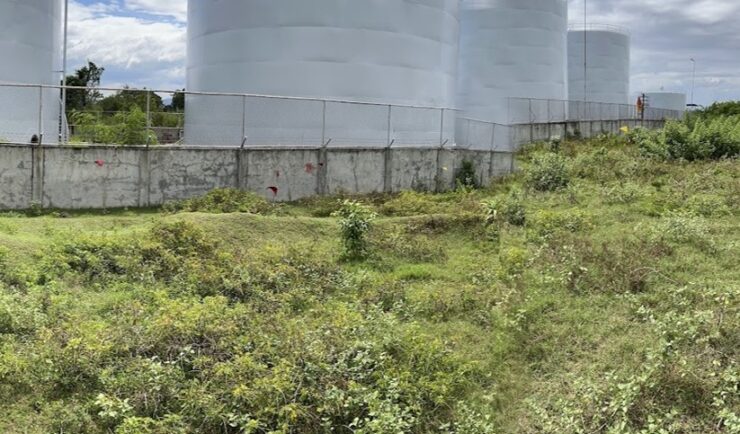
Our employee owners have been supporting a remediation project in the Philippines. Diesel fuel leaked from a storage tank and seeped into the groundwater and soil. Emergency measures were taken but clean-up was delayed due to COVID restrictions. After some of the more strict COVID restrictions were lifted, CSS scientists joined the environmental due diligence…