
- Success Stories, Uncategorized
- Environmental Resource Assessment & Management
Revamping Coral Reef Conservation Program Website
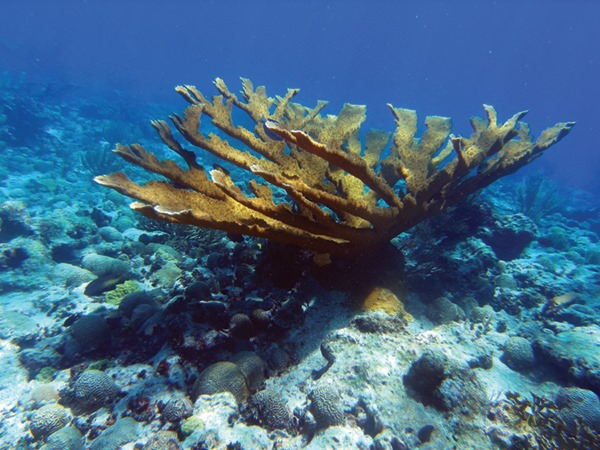
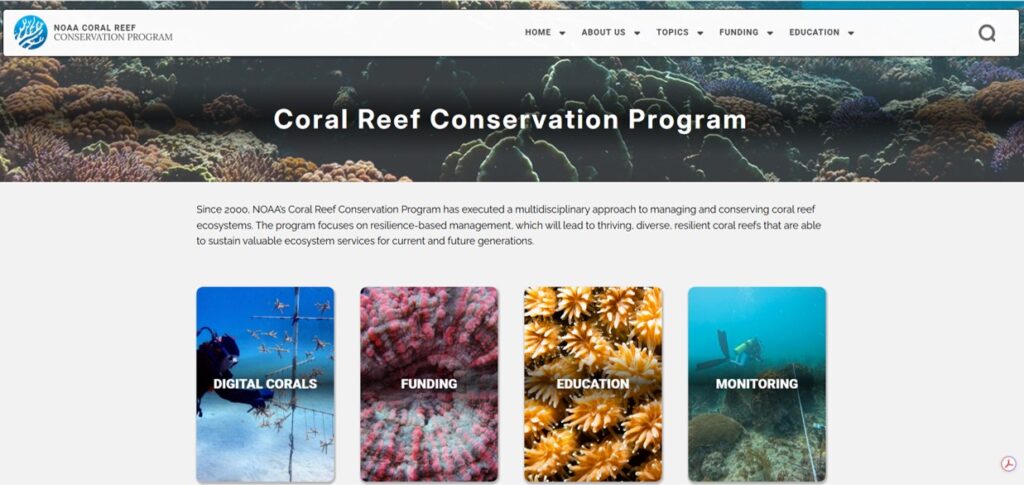
NOAA’s Coral Reef Conservation Program is a cross-NOAA program that focuses on resilience-based management of U.S. coral reef ecosystems and provides scientific data and information to coral reef managers, scientists, educators and the interested public. CSS employee owners recently played an integral role in updating the website with a fresh new look and reorganizing content to provide this information in a more user-friendly, easily accessible format.
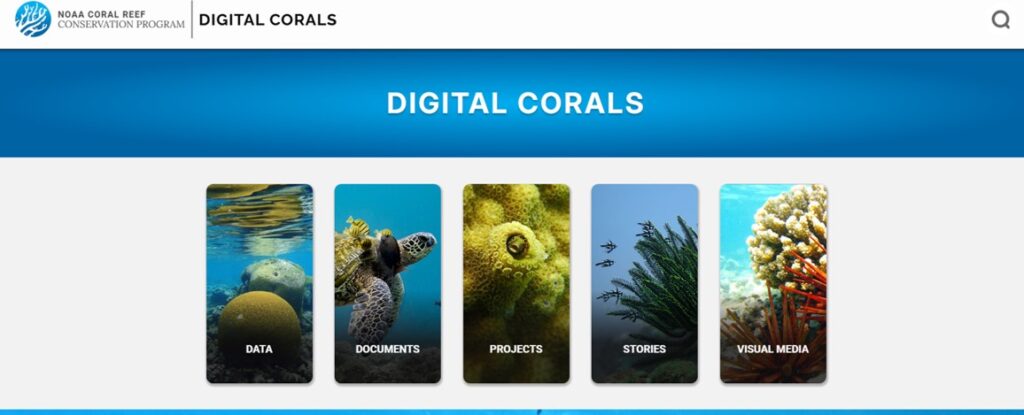
The Coral Reef Conservation Program Communication Director — a role filled by a CSS employee owner — worked with web developers and data managers from NOAA’s Office for Coastal Management and National Centers for Environmental Information to provide input on content organization, design, and functionality. The focus areas of the program, such as management capacity, sustainable fisheries, restoring coral reefs, and monitoring coral reefs and communities, are now organized in a more intuitive location, with the topics listed on the main page menu. Additionally, as part of this build, the team developed Digital Corals, a portion of the new website where users can more easily access data, documents, projects and stories. This new section presents a more modern-looking user interface and provides seamless access whereas users previously had to jump to a different system that was less intuitive to navigate. This task was quite complex as the previous information portal contained more than 20 years of data and publications that were transferred to the new system.
Visit the new Coral Reef Conservation Program to view the full experience.
See More CSS Insights
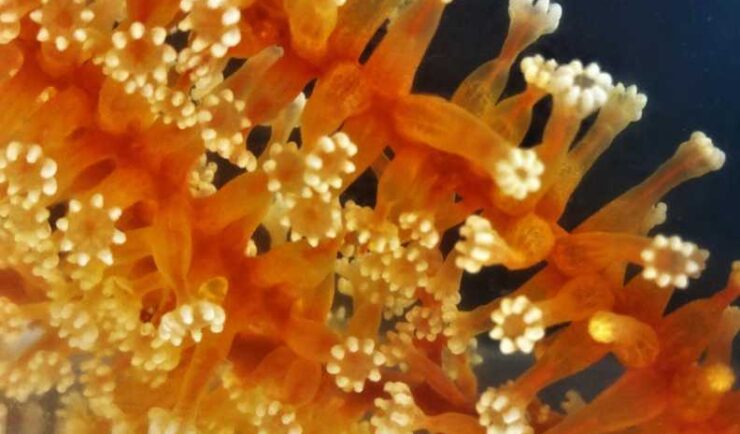
Collecting and Studying Deep-Sea Coral
Three of our staff supporting NOAA’s National Centers for Coastal Ocean Science joined a team of nine other scientists on a 12 day expedition to collect deep-sea coral samples in the Gulf of Mexico.

Fire Detection Support
CSS provides fire detection support to the Atmospheric Science and Technology Applications team with NOAA’s National Environmental Satellite, Data, and Information Services. CSS Surface Characteristics Scientist serves on the Fire Emissions and Fire Detection teams, providing data manipulation, algorithm development, and performance evaluation for the system. This ensures fast and reliable satellite data to stakeholders,…
Quality Assurance Audit Reports
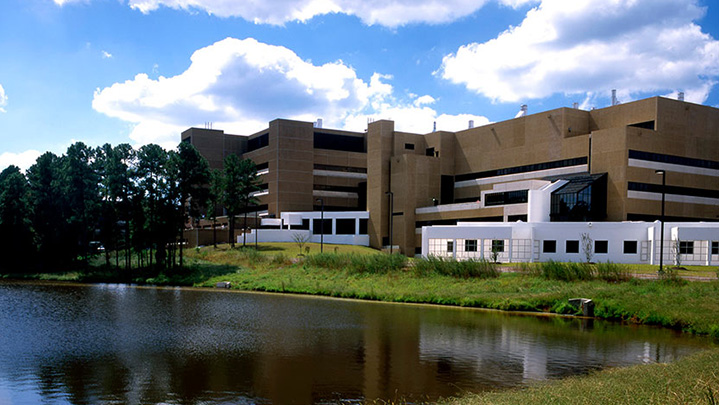
Since 1985 we’ve supported the National Institute of Environmental Health Sciences and have provided more than 1,600 quality assurance audit reports that the client has used to assess the quality of toxicology studies they sponsor. Over the last year our employee owners reviewed several studies involving per- and polyfluorinated substances (PFAS) compounds, or “forever chemicals”,…