
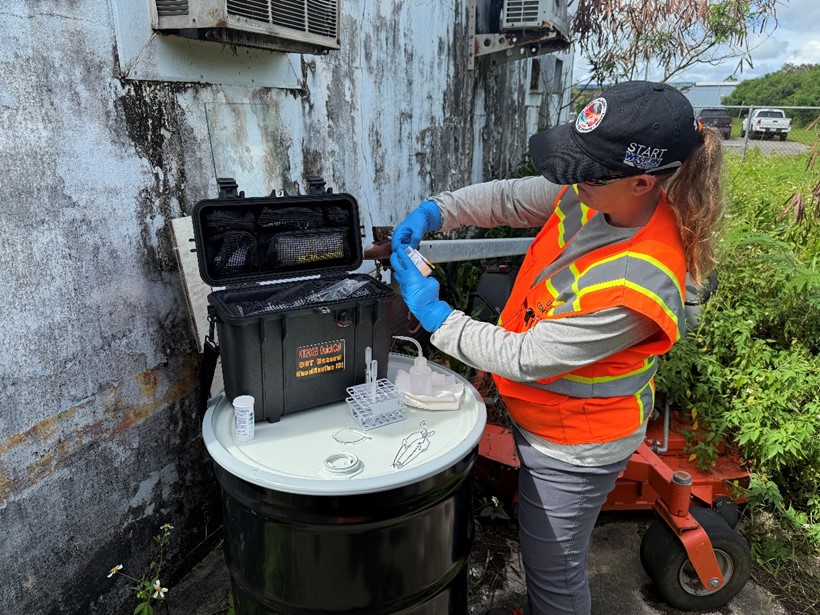
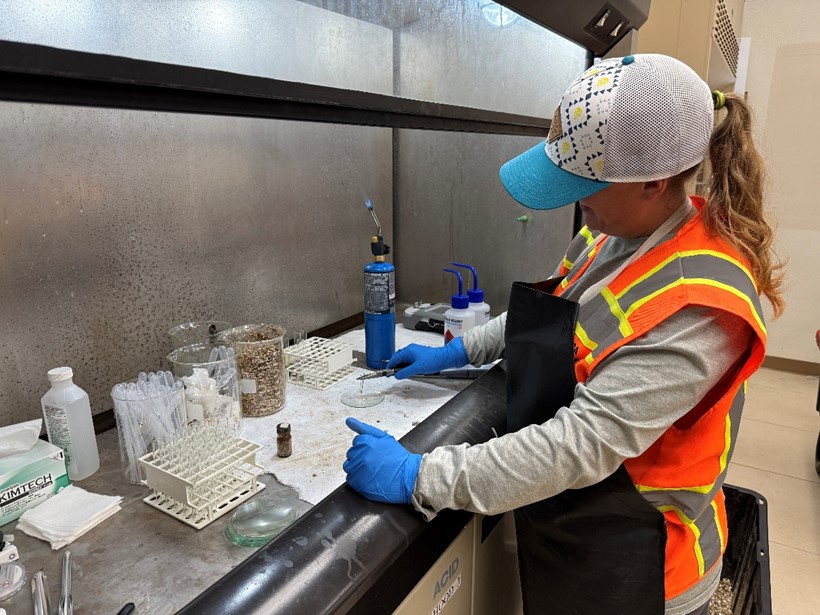
Senior chemist working on the CSS contract with the Environmental Protection Agency’s (EPA) Superfund Technical Assessment and Response Team (START) supported the Guam Lab Chemicals Round Up in March of 2024 and July of 2025. During both mobilizations, START supported EPA’s mission to collect chemical waste items from across the U.S. island territory of Guam for off-island transport and disposal. As a field chemist, CSS employee owner supporting the effort conducted Hazard Categorization (HazCat) testing on hundreds of unlabeled waste items to help determine the most appropriate waste stream for safe shipping and disposal of each item. CSS employee owner used the EPA Region 9 GeminiTM Chemical Identification analyzer to identify chemicals that appeared to be in their original containers, but that had missing or weathered labels. START supported worker health and safety by conducting screening of the chemical collections and storage spaces for toxic and volatile gases, explosive limits, radiation, and mercury vapor prior to initiating work, and by conducting air monitoring for toxic and volatile gases, and explosive limits during all handling and packing of the chemical wastes.
See More CSS Insights
Monitoring Air Quality in California’s San Joaquin Valley
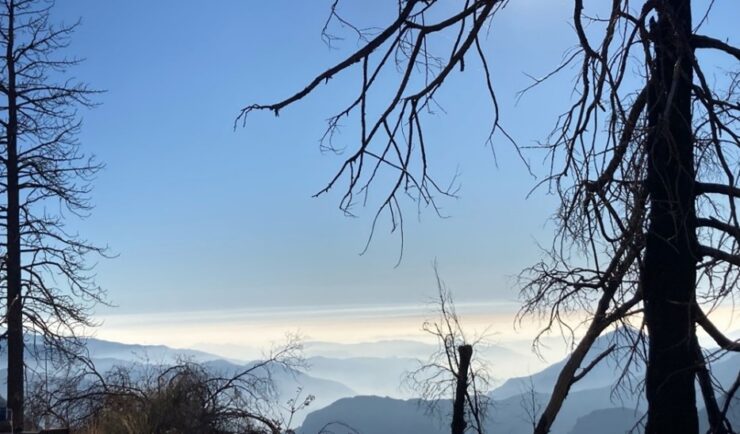
CSS employee owners supported the deployment and operation of the U.S. Environmental Protection Agency (EPA) air quality monitoring trailer (WEAVE COM – Western Enhanced Air quality VEhicle for COmmunity Monitoring) in California’s San Joaquin Valley in during late fall and early winter of 2024. Elevated particulate matter (PM2.5) is frequently found throughout the valley during…
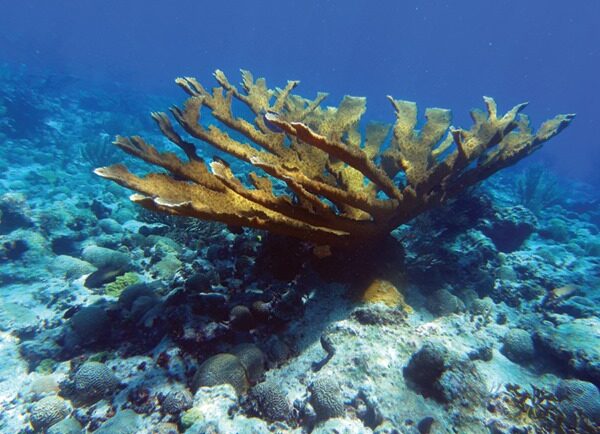
Revamping Coral Reef Conservation Program Website
NOAA’s Coral Reef Conservation Program is a cross-NOAA program that focuses on resilience-based management of U.S. coral reef ecosystems and provides scientific data and information to coral reef managers, scientists, educators and the interested public. CSS employee owners recently played an integral role in updating the website with a fresh new look and reorganizing content…
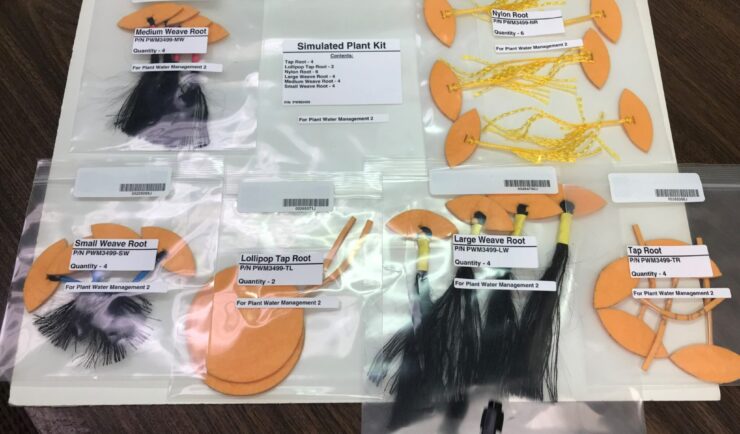
Astronauts Conduct Latest Plant Water Management on the International Space Station
NASA recently performed the sixth iteration of the CSS-supported Plant Water Management experiment on the International Space Station (ISS).