
- CSS News, Success Stories
- Emergency Preparedness & Response
Emergency Response Support for the Republican National Convention
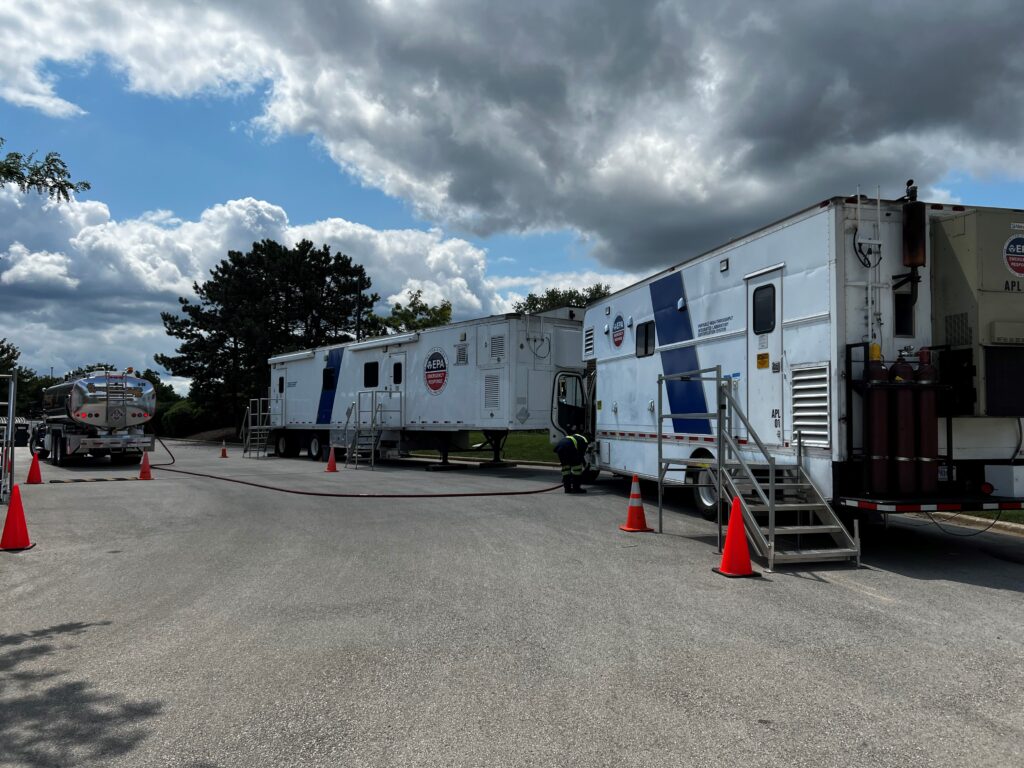
CSS employee owners on contract with the U.S. Environmental Protection Agency’s Portable High-throughput Integrated Laboratory Identification System — a mobile analytical unit known as PHILIS — provided emergency response support for the 2024 Republican National Convention. PHILIS mobile laboratory units are designed to provide onsite analysis of environmental conditions, including air and soil samples, contaminated with chemicals. While the convention was held in Milwaukee, Wisconsin, the team was stationed on stand-by in a nearby location in Illinois to provide emergency response for the event of around 50,000 individuals.
The PHILIS team was prepared to support analysis of
- Volatile organic compounds for liquid, solid and air matrices by gas chromatography-mass spectrometry (GCMS)Semi-volatile organic compounds analysis for liquid and solid by GCMS
- Opioids for liquid, solid and wipe matrices by GCMS-Large Volume Injections (LVI)
- Chemical agent for liquids, solid and wipe matrices by GCMS-LVI
- Various forms of organophosphate nerve agent and venomous agent X for liquid, solid and wipe matrices by ultra performance liquid chromatography mass spectrometry (UPLCMSMS)
- Opioids for liquid, solid and wipe matrices by UPLCMSMS
Throughout the deployment, the team received many visitors, several of them from Hazardous Waste Operations and Emergency Response (HAZWOPER) training and exercise and some on scene coordinators from Region 5. The team analyzed a handful of ‘mock’ air samples at the RNC, which could be characterized as an informal exercise.


See More CSS Insights

Developing a Database for Ecosystem Service Models
CSS scientists have been major developers and contributors to the online U.S. Environmental Protection Agency’s EcoService Models Library (ESML) database since its inception in 2012. The ESML database contains detailed but concise descriptions of ecosystem service models to facilitate the selection of models by ecosystem scientists for a variety of management and research applications. The…
Emergency Response Support for the Republican National Convention
CSS employee owners on contract with the U.S. Environmental Protection Agency’s Portable High-throughput Integrated Laboratory Identification System — a mobile analytical unit known as PHILIS — provided emergency response support for the 2024 Republican National Convention. PHILIS mobile laboratory units are designed to provide onsite analysis of environmental conditions, including air and soil samples, contaminated…
Assessing Contamination in Abandoned Mines
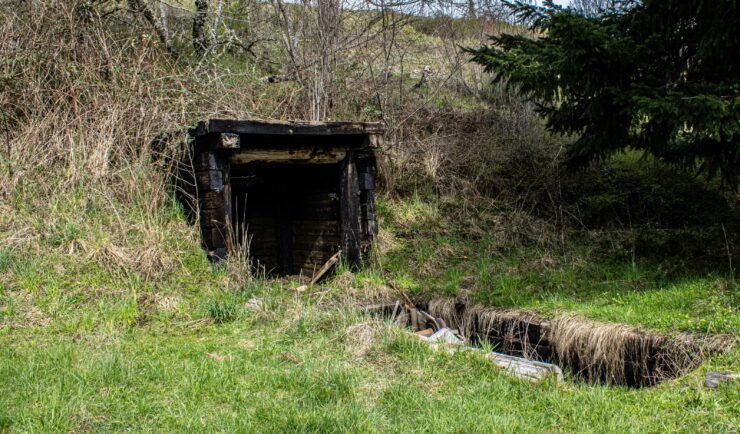
CSS supports the Environmental Protection Agency with assessing contamination within abandoned mines. There are thousands of abandoned mines throughout the western United States. Many of these mines are leaching heavy metals into nearby streams or have contaminated soils causing vegetation die off. CSS employee owners conduct field work to assess the extent of this contamination.…