

NOAA relies on orbiting satellites to collect data for Climate Data Records (CDR). However, these satellites degrade over time and can be at risk of failing. Degradation or failure of critical space instruments can cause interruptions in Earth’s climate system data, disrupting the ongoing record collection.
In support of NOAA’s National Centers for Environmental Information, CSS program manager for CDR proactively managed product transitions that were impacted from major instrument upgrades. This included the retirement of the Japan Aerospace Exploration Agency (JAXA) satellite sensor, AMSR2, that is used to track sea ice as well as the decommissioning of the NOAA POES sensor in 2025, which was used in many CDRs. CSS coordinated with data centers and external partners to align these aging satellite feeds with the new satellite feeds, providing upgraded CDRs to advance the monitoring of the Earth’s systems. This proactive risk management ensures downstream users can depend on CDRs for their decision-making needs.
Learn more about NOAA’s Climate Data Records.

See More CSS Insights
CSS Awarded Five Year Subcontract Supporting the Bureau of Engraving and Printing
For over 22 years, CSS has supported the Bureau of Engraving and Printing (BEP). Originally as a prime contractor, CSS began supporting BEP in 2002. In November 2024, a new prime contractor, Koniag, signed CSS as a major subcontractor, which enabled CSS employee owners to continue providing comprehensive environmental, occupational safety and industrial hygiene support…
Evaluating the Use of Earth Observations Digital Twin Technologies
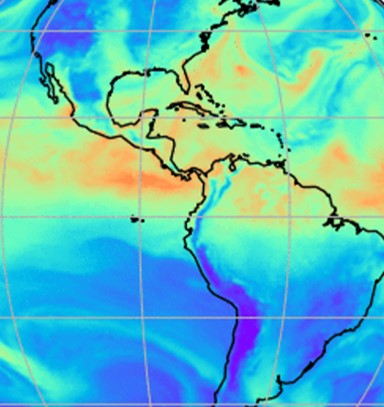
Earth Observations Digital Twin technologies are data analytics, artificial intelligence, and advanced modeling technologies that provide an estimate of the true state of the Earth. An Earth Systems Digital Twin is observations-based and grid-flexible with multiple components and high-resolution data over space and time to capture all available observations and feed a variety of direct…
Studying Mesophotic Coral Health
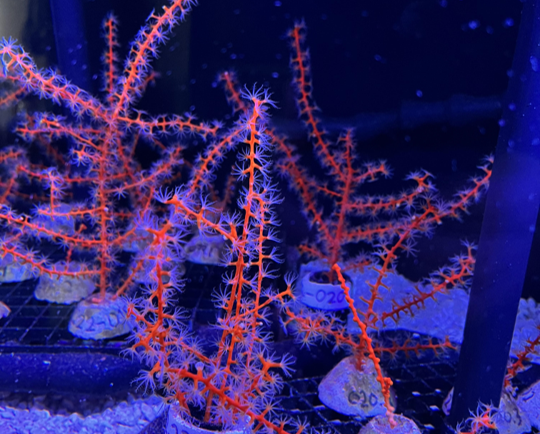
Mesophotic coral can live at depths of 500 feet below the ocean surface. Even at this depth, some of the mesophotic corals in the Gulf of Mexico were affected by the Deepwater Horizon oil spill in 2010. Our coral scientists supporting NOAA’s National Centers for Coastal Ocean Science are studying the extent of this impact.…