
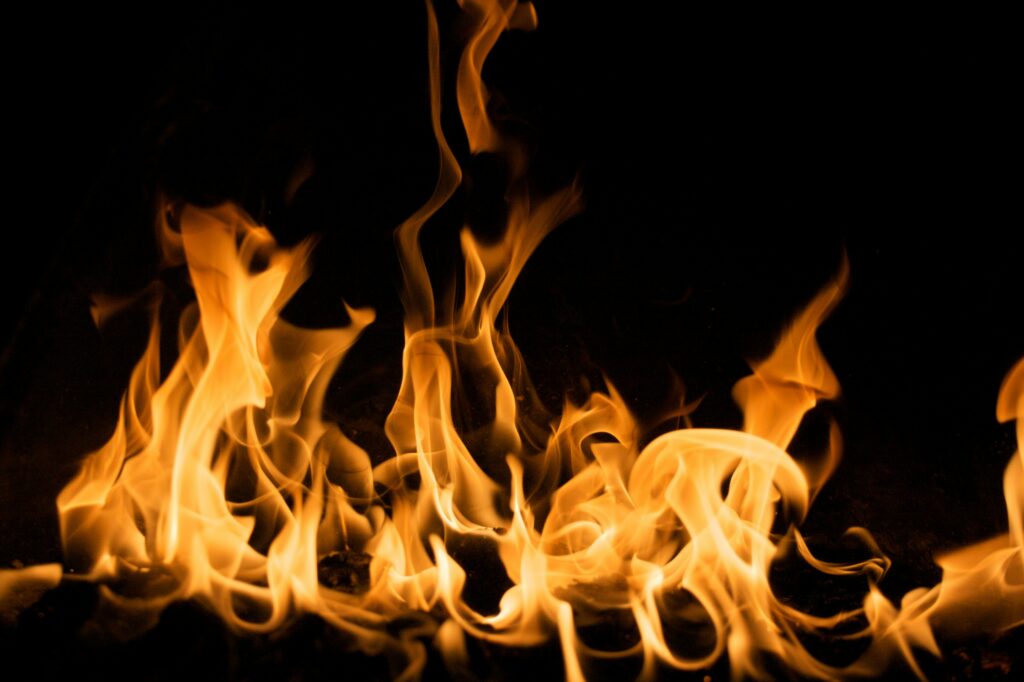
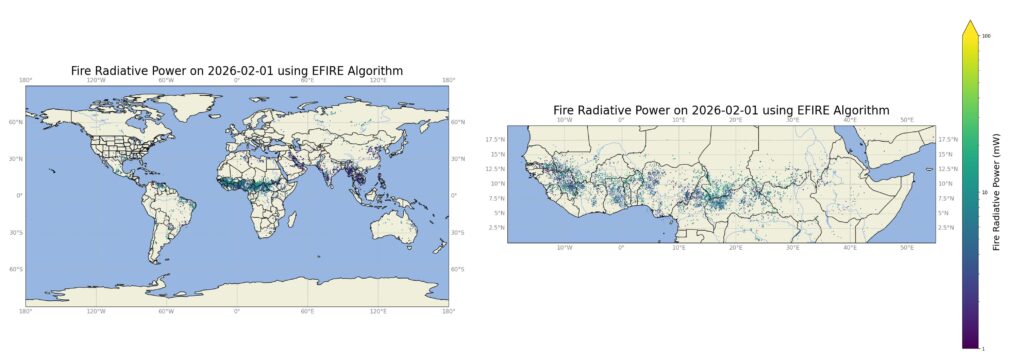
CSS provides fire detection support to the Atmospheric Science and Technology Applications team with NOAA’s National Environmental Satellite, Data, and Information Services. CSS Surface Characteristics Scientist serves on the Fire Emissions and Fire Detection teams, providing data manipulation, algorithm development, and performance evaluation for the system. This ensures fast and reliable satellite data to stakeholders, as well as researchers in the long-term. The CSS surface characteristics scientist will transition to Visible Infrared Imaging Radiometer Suite (VIIRS)-Based Next Generation Fire System data retrieval and validation for the U.S. Department of the Interior federal land fire cases. This system is an experimental satellite-based fire detection algorithm developed by the University of Wisconsin. It uses multi-band imaging capabilities to obtain high-resolution atmospheric imagery and generate a variety of applied products, one of which includes visible and infrared imaging for detecting fires, smoke, and atmospheric aerosols. CSS will be working on location accuracy of fire detection for the Next Generation Fire System.
See More CSS Insights
Supporting the National Integrated Drought Information System Team
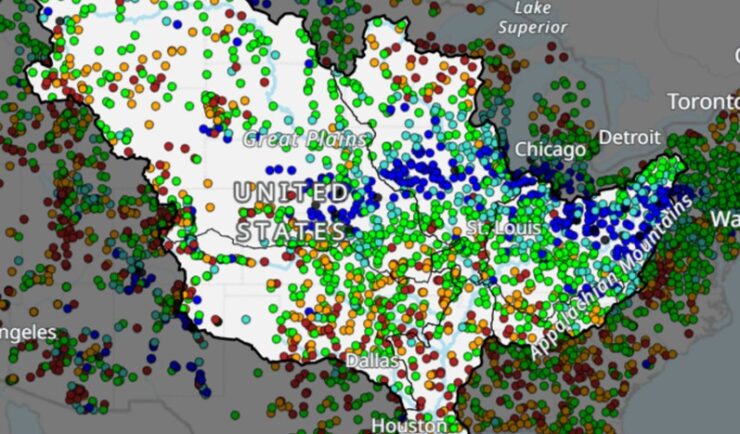
Drought is one of the most expensive and far-reaching natural disasters we face, contributing to wildfires and impacting everything from the food on our tables to the water in our taps and the barges carrying cargo down our rivers. To help communities, farmers, and leaders stay ahead of these dry spells, the National Integrated Drought…
More Than 1,600 Great Lakes Water Samples Analyzed
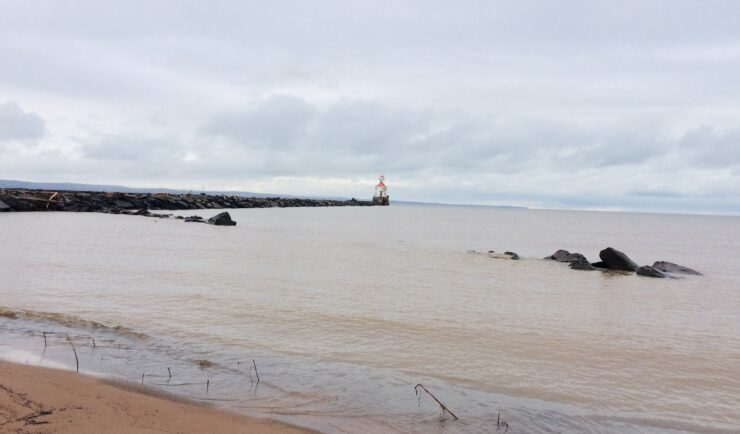
More than 30 million people rely on the Great Lakes for drinking water, and they support a fisheries industry valued at $5.1 billion annually. Monitoring the Lakes’ water chemistry is a vital part of maintaining the quality of this key natural resource. The U.S. Environmental Protection Agency (EPA) is responsible for collecting and testing water samples in…
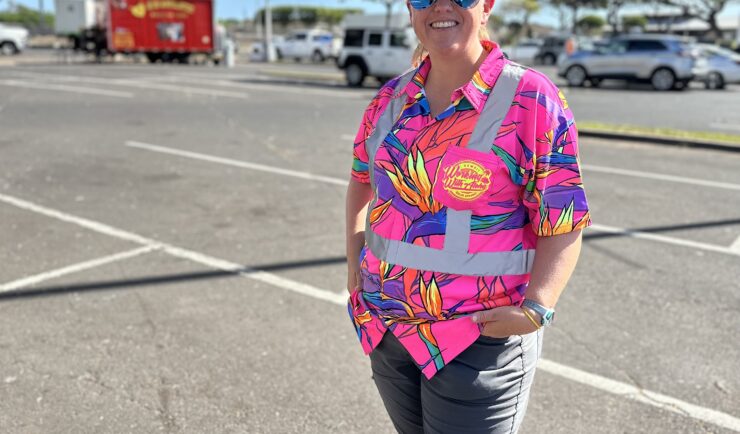
Assisting With Maui Wildfire Recovery
As part of our support to U.S. Environmental Protection Agency (EPA) Region 9 Superfund Technical Assessment & Response Team (START)—for which we are subcontracted through Weston Solutions, Inc.—CSS employee owners have been on-site in three-week rotations to assist throughout the rigorous recovery process.