
- Success Stories
- Satellite Science & Environmental Intelligence
Supporting the Launch of NOAA Data to Inform More Resilient Infrastructure Designs and Structures
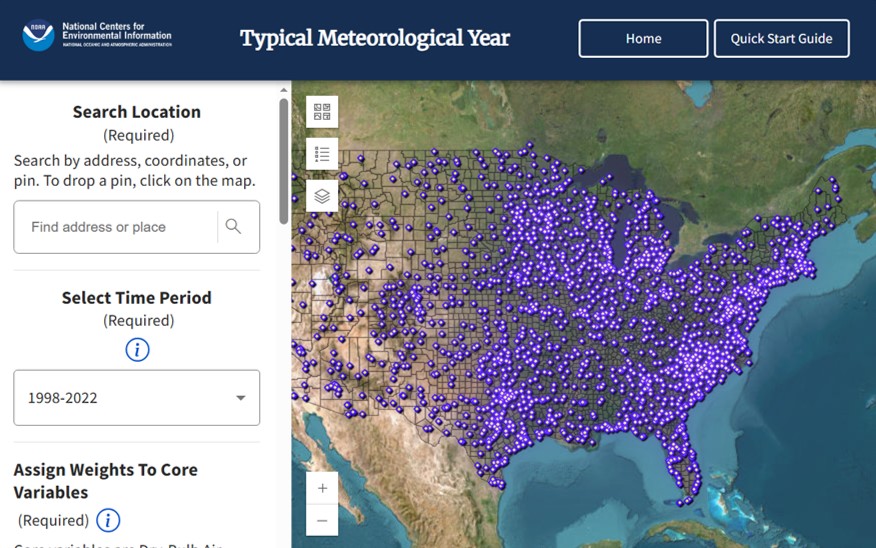
Congratulations to NOAA for launching their new Typical Meteorological Year product, developed by the National Centers for Environmental Information (NCEI) as part of the industry initiative. This effort helps make environmental data actionable for architects and engineers designing the next generation of resilient infrastructure. CSS is proud to support this effort and our employee owners who contributed to this product.
The Typical Meteorological Year (TMY) product provides location-specific meteorological data that represents a “typical” year for a given site. By combining historical observations with future climate projections through 2100, TMY enables professionals to design with both past conditions and future risks in mind.
Available across all 50 U.S. states, Puerto Rico, and the U.S. Virgin Islands, TMY includes key variables such as:
- Temperature – to optimize insulation, heating, and cooling
- Solar radiation – to guide energy-efficient building design
- Wind speed – to support structural durability and ventilation
- Precipitation – to inform drainage and water management
NOAA shaped TMY through input from and engagement with architecture and engineering leaders, including the American Society of Civil Engineers and the American Institute of Architects. This user engagement effort — co-led by CSS employee-owners — helped refine the interface and determine the most useful variables and which data formats flow seamlessly into design and modeling tools.
By incorporating historical data and future climate projections into modeling, TMY helps architects and engineers design safer, more resilient structures—including hospitals, schools, bridges, and stormwater systems.
TMY is delivered through an interactive web interface with flexible download options, making it easy to access and apply in real-world projects. Environmental data tools like TMY enable data-driven decisions that improve performance, reduce risk, and support long-term resilience.
CSS played a critical role in the development of this tool, including managing the development (timeline, scope, and team), and developing the interface, backend, methodology, and website landing page. CSS is proud of our team’s contributions to the NCEI industry initiative and this great accomplishment. This effort is supporting data-driven decisions, strengthening national preparedness, and helping communities thrive in the face of extreme weather.
NOAA’s National Environmental Satellite, Data, and Information Service recognized the TMY development team with their Outstanding Science and Research Team Member Award, highlighting the innovation and impact of this first-of-its-kind industry collaboration.
See More CSS Insights
Fueling NOAA’s Scientific Partnerships
Maintaining NOAA’s active global climate tracking requires seamless collaboration with top-tier universities, research labs, and private contractors. In support of NOAA’s National Centers for Environmental Information, CSS program manager for Climate Data Records (CDR) has managed complex budget plans and contract modifications, securing crucial funding for essential climate variables. This effort directly preserved funding for CRDs including the Total Solar Irradiance CDR (which measures the Sun’s energy…
Engaging in New and Emergent Satellite Technologies
CSS employee owners (formerly Riverside employees) support the National Oceanic and Atmospheric Administration’s (NOAA) National Environmental Satellite, Data, and Information Service’s (NESDIS) Center for Satellite Applications and Research (STAR). STAR is the science arm of NESDIS, which acquires and manages the nation’s environmental satellites for NOAA. Satellite observations are critical to informing situational awareness and…
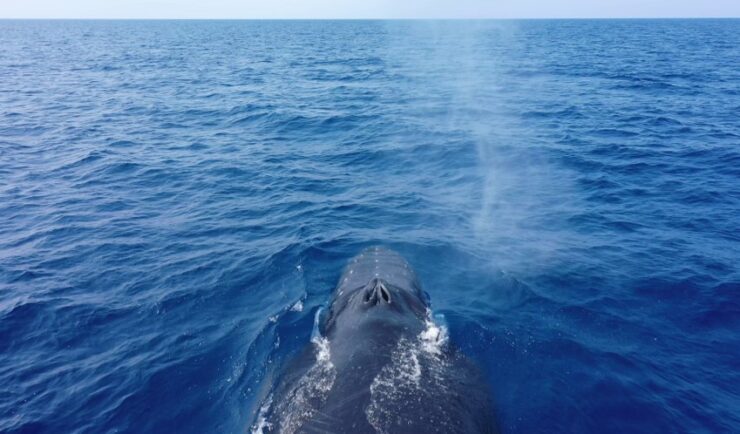
Training Marine Mammal Programs to Use Drones to Collect Dolphin and Whale Respiratory Health Data
CSS employee owner and Marine Mammal Drone Specialist supports NOAA’s National Centers for Coastal Ocean Science (NCCOS) Marine Mammal Health Assessment team with collecting respiratory health data from marine mammals in local waterways. Using specialized drones equipped with petri dishes provides a non-invasive method to collect exhaled breath (i.e. blow) samples from dolphins and whales.…