
- Success Stories, Uncategorized
- Environmental Resource Assessment & Management
Revamping Coral Reef Conservation Program Website
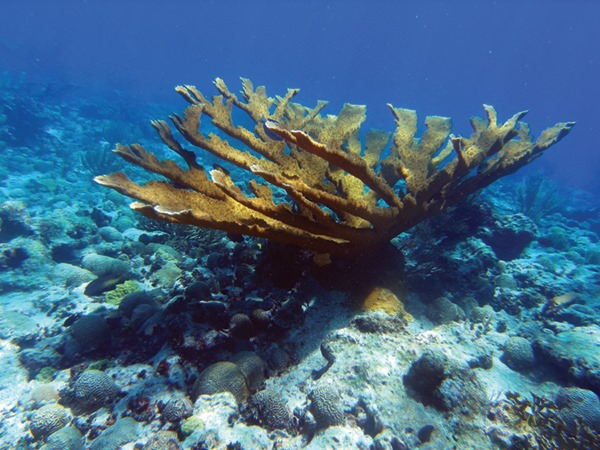
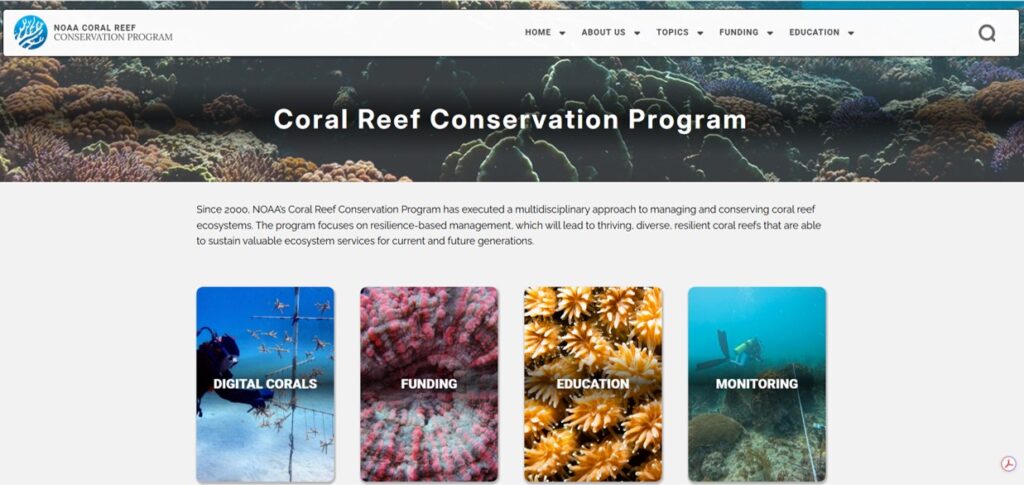
NOAA’s Coral Reef Conservation Program is a cross-NOAA program that focuses on resilience-based management of U.S. coral reef ecosystems and provides scientific data and information to coral reef managers, scientists, educators and the interested public. CSS employee owners recently played an integral role in updating the website with a fresh new look and reorganizing content to provide this information in a more user-friendly, easily accessible format.
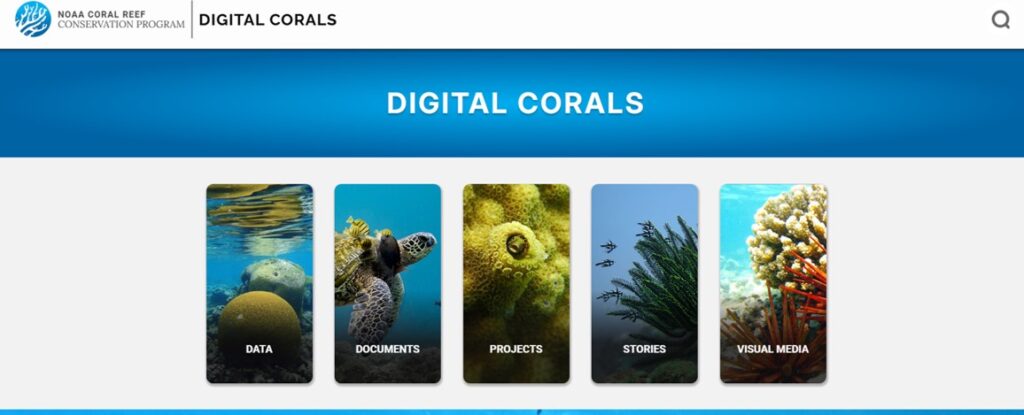
The Coral Reef Conservation Program Communication Director — a role filled by a CSS employee owner — worked with web developers and data managers from NOAA’s Office for Coastal Management and National Centers for Environmental Information to provide input on content organization, design, and functionality. The focus areas of the program, such as management capacity, sustainable fisheries, restoring coral reefs, and monitoring coral reefs and communities, are now organized in a more intuitive location, with the topics listed on the main page menu. Additionally, as part of this build, the team developed Digital Corals, a portion of the new website where users can more easily access data, documents, projects and stories. This new section presents a more modern-looking user interface and provides seamless access whereas users previously had to jump to a different system that was less intuitive to navigate. This task was quite complex as the previous information portal contained more than 20 years of data and publications that were transferred to the new system.
Visit the new Coral Reef Conservation Program to view the full experience.
See More CSS Insights
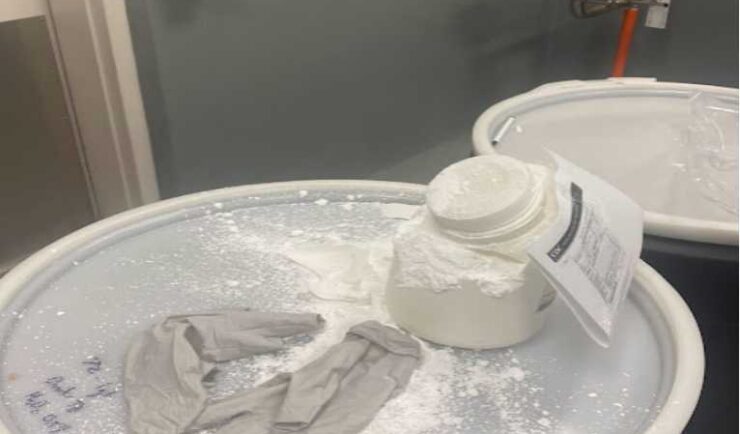
Rapid Reporting of a Close Call Incident
CSS Safety Protocols During a routine collection of waste, a container of white powder disintegrated without warning, causing the powder to spill and be expelled into the air. Thanks to CSS’s safety protocols and quick response, our Center for Disease Control waste disposal staff was able to assess the situation and respond to the chemical…

Assisting Career Growth for Future Coastal Managers
NOAA’s Margaret A. Davidson Fellowship is a two-year fellowship for graduate students that provides an opportunity for them to work side by side with researchers at one of the 30 National Estuarine Research Reserves. The fellowship provides each cohort of fellows with hands-on and cross-disciplinary research experiences, networking opportunities, and professional development and mentoring, helping to prepare them…
Revamping Coral Reef Conservation Program Website
NOAA’s Coral Reef Conservation Program is a cross-NOAA program that focuses on resilience-based management of U.S. coral reef ecosystems and provides scientific data and information to coral reef managers, scientists, educators and the interested public. CSS employee owners recently played an integral role in updating the website with a fresh new look and reorganizing content…