
- Success Stories
- Environmental Resource Assessment & Management
Examining Cetaceans for Contamination and Pathogens
CSS has employee owners who are experts in monitoring cetacean health. Several CSS scientists supporting NOAA’s Centers for Coastal Ocean Science have recently conducted research and tests on marine mammals to explore uncommon behaviors and causes for strandings. View some examples of this research below.
Microplastics are becoming increasingly abundant in coastal and marine environments. A CSS marine mammal microplastics specialist is monitoring microplastic abundance and types in the gastrointestinal tracts of stranded cetaceans. Since 2022 our specialist has processed over one kilometer of intestines from 53 marine mammals, most of which have been Tamanend’s bottlenose dolphins (Tursiops erebennus) local to the Charleston Harbor Estuary. Our specialist has discovered microplastics in every marine mammal tested to date, with the most common plastic being polypropylene fibers, a plastic commonly used in fishing nets, construction materials, textiles, and other synthetic products.

CSS scientists are using unoccupied aerial systems (UAS), also known as drones, to collect blow exhalation samples from Tamanend’s bottlenose dolphins in the Charleston Harbor Estuary. Over the past 20 years, these dolphins have been observed moving from waters with higher salinity to waters with low salinity, often needing rescuing and displaying poor health conditions. Using a UAS equipped with petri dishes enables scientists to monitor the respiratory health of dolphins at low cost in a non-invasive manner. Through these collections, CSS scientists are screening samples for respiratory pathogens and have screened more than 40 samples to date.

When the South Carolina Department of Natural Resources discovered a beached 43 ft sperm whale in Bulls Bay along the South Carolina coast, CSS cetacean specialists jumped to action. They assisted the Lowcountry Marine Mammal Network with the field response and partial necropsy by transporting supplies to the site, taking measurements, recording data, and collecting samples to understand what may have caused the death of this animal. The team examined the whale’s stomach and intestines for potential plastic ingestion.Throughout the examination, the team did not discover (macro)plastics within the cetacean’s digestive tract.
See More CSS Insights
55 Years of Earth Day!
Since April 22, 1970 — that’s 55 years! — we’ve celebrated Earth Day to raise environmental awareness and support for environmental protection. At CSS we have a passion for the environment and through various government contracts, we work with our clients to overcome challenges to help protect this rock we call home. Below are a…

Fire Detection Support
CSS provides fire detection support to the Atmospheric Science and Technology Applications team with NOAA’s National Environmental Satellite, Data, and Information Services. CSS Surface Characteristics Scientist serves on the Fire Emissions and Fire Detection teams, providing data manipulation, algorithm development, and performance evaluation for the system. This ensures fast and reliable satellite data to stakeholders,…
Hurricane Helene One Year Later: Shedding Light on the Impact
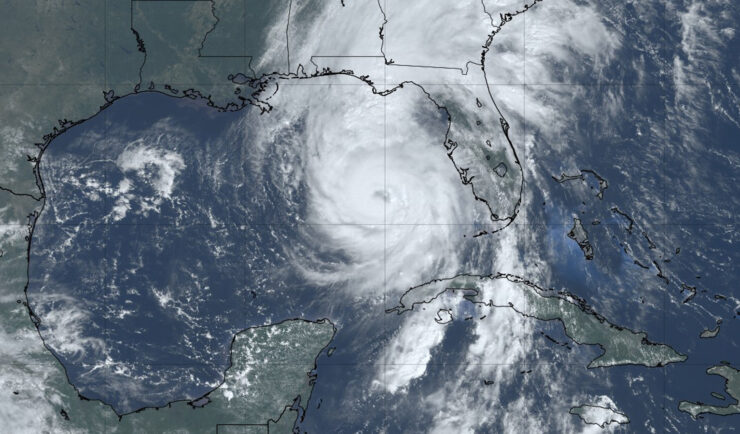
It’s been one year since Hurricane Helene caused catastrophic damage throughout the southern Appalachia region, especially Tennessee and North Carolina, where several rivers experienced above-record flooding. CSS employee owners (previously Riverside Technology, inc.) supporting NOAA’s National Centers for Environmental Information (NCEI) helped develop a Hurricane Helene StoryMap, Helene in Southern Appalachia, a dynamic tool that integrates diverse…