
- Community Spotlight, Success Stories, Uncategorized
- Satellite Science & Environmental Intelligence
Evaluating the Use of Earth Observations Digital Twin Technologies
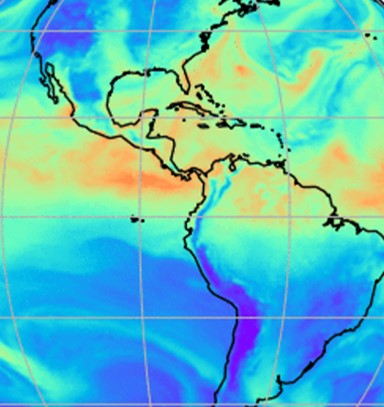
Earth Observations Digital Twin technologies are data analytics, artificial intelligence, and advanced modeling technologies that provide an estimate of the true state of the Earth. An Earth Systems Digital Twin is observations-based and grid-flexible with multiple components and high-resolution data over space and time to capture all available observations and feed a variety of direct observations to users. Adding or removing data is flexible, cost-efficient, and agile with fast processing. NOAA’s National Environmental Satellite, Data, and Information Service (NESDIS) is exploring the use of this technology.
Through their joint venture program, they contracted three companies to each developed a prototype to explore this technology. CSS employee owners (formerly Riverside staff) were responsible for evaluating these prototypes. Our staff evaluated the code for each Earth Observations Digital Twin prototype and explored using them for enhancing the ability to process, monitor, quality-control, consolidate, fuse, and assimilate environment observations and streamline the satellite data ground processing. Our staff provided feedback and recommendations to NESDIS regarding the validity and integrity of using an Earth Observations Digital Twin, and whether or not they could be used for potential future applications.

Learn more about how NESDIS is exploring the use of Earth Observations Digital Twin.
See More CSS Insights
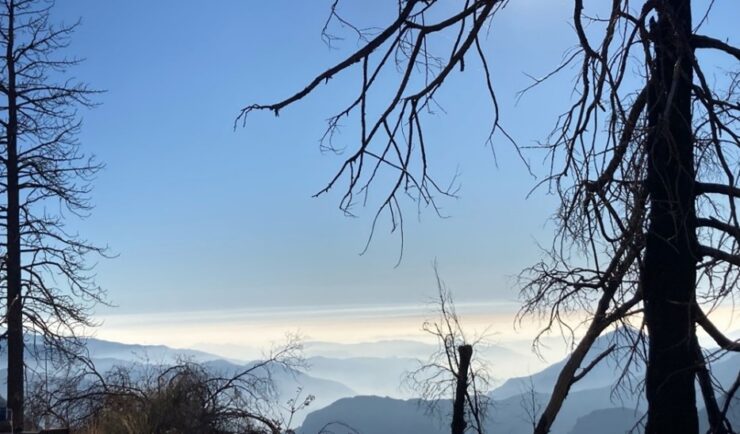
Monitoring Air Quality in California’s San Joaquin Valley
CSS employee owners supported the deployment and operation of the U.S. Environmental Protection Agency (EPA) air quality monitoring trailer (WEAVE COM – Western Enhanced Air quality VEhicle for COmmunity Monitoring) in California’s San Joaquin Valley in during late fall and early winter of 2024. Elevated particulate matter (PM2.5) is frequently found throughout the valley during…
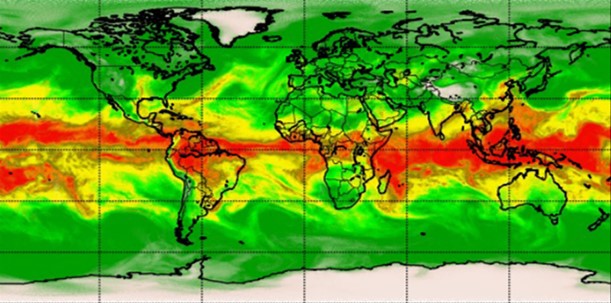
Advancing Severe Weather Predictions with Artificial Intelligence
As artificial intelligence (AI) and machine learning (ML) technologies evolve in Earth sciences, CSS employee owners (formerly Riverside staff) are growing our expertise in this field. CSS employee owners are advancing technologies for our client, NOAA’s Center for Satellite Applications and Research (STAR). Our staff have developed a framework, exploiting modern AI/ML techniques, to rapidly…
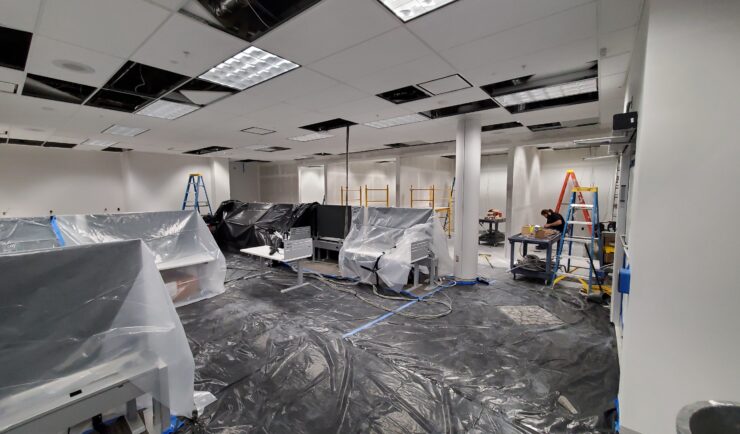
Custom Support to Space Florida
Our team recently reconfigured the office space and network for an incoming Space Life Science Lab tenant, Vaxxinity. This work included major renovations to the lab and office space, and new cable runs for their modified space. The team completed this large task within a four week period! Our Florida IT group works closely with…