
- Success Stories
- Environmental Resource Assessment & Management
Remediating Soil Surrounding Abandoned Mines
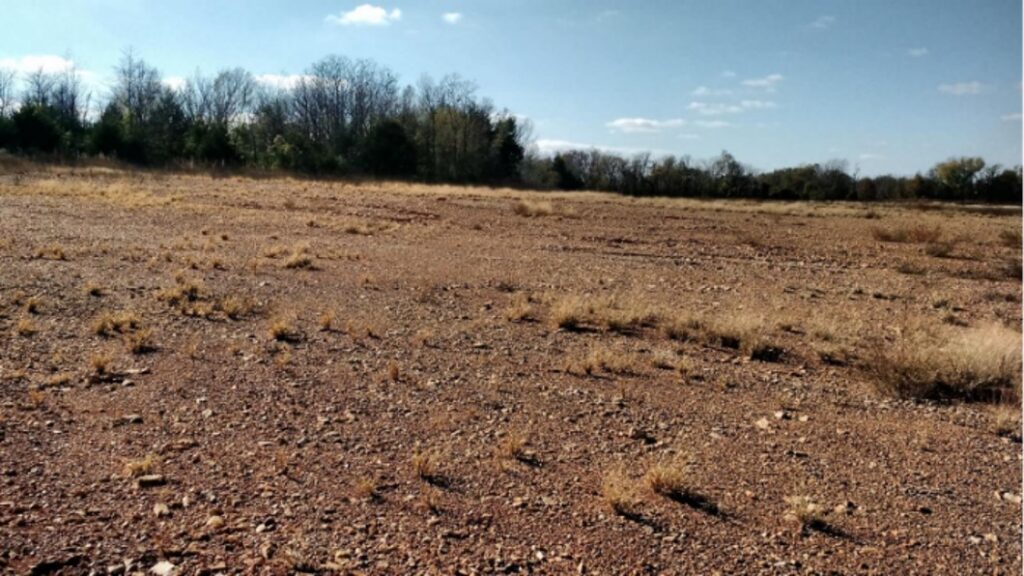
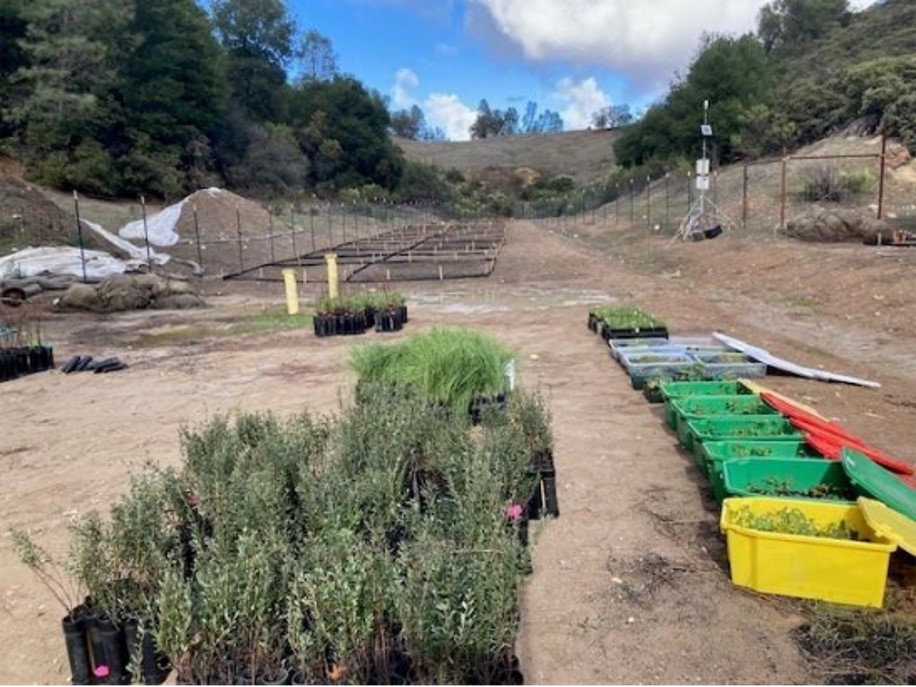
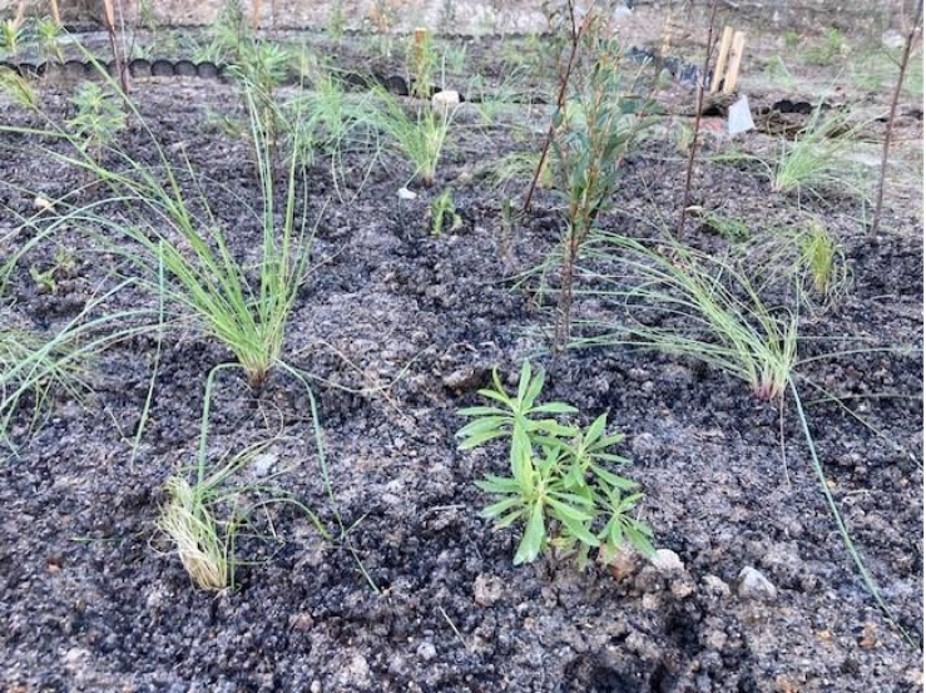
CSS employees have been providing field, lab, and horticultural support for the Environmental Protection Agency’s efforts to develop and test methods for the remediation and revegetation of contaminated soils around selected abandoned mines in the western United States. One of the promising approaches is to incorporate biochar into the soil. Using biochar helps effectively adsorb trace metals and reduce their toxic impacts to plants. CSS field staff recently helped set up 60 large plots at an abandoned mine site in California to test the feasibility and effectiveness of biochar additions for facilitating plant establishment. They tilled in biochar and fertilizer into the designated plots. As part of this project, CSS employees tested horticultural methods for propagating and growing native plant species for transplanting into the field plots. CSS plant specialist raised populations of eight California native plant species totaling over 4,000 individual plants available for the field study. Recently the team transported about 2,500 of the plants to the field site and planted them.
Upon first assessment in December 2025, CSS field staff report that the transplants are healthy. The team will continue to monitor the status of the plants over the next several months and collect data to ascertain which field plot amendments were most effective in supporting the establishment of the native species.
See More CSS Insights
Supporting Response Efforts Following California Fires
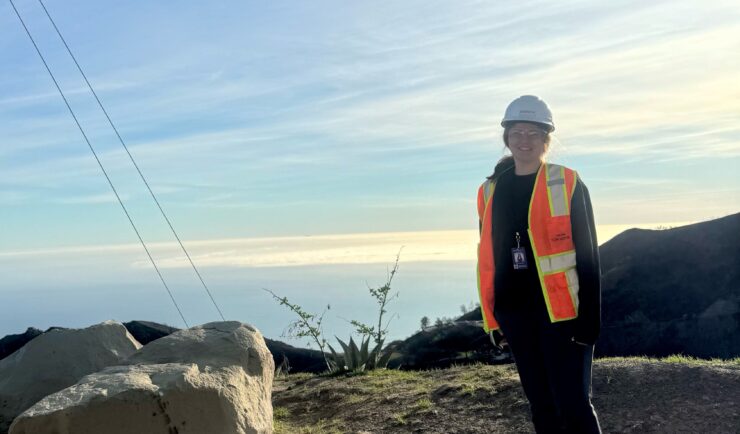
Following the fires that devastated Los Angeles, California and surrounding areas in January 2025, CSS employee owners were deployed to the area as a subcontractor to Weston Solutions, Inc. to assist with the response. This effort supports U.S. Environmental Protection Agency (EPA) Region 9 Superfund Technical Assessment & Response Team (START) program. Initially, a CSS…
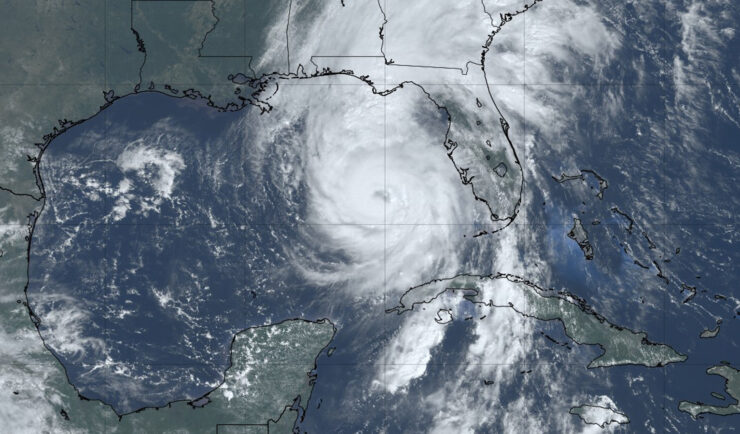
Hurricane Helene One Year Later: Shedding Light on the Impact
It’s been one year since Hurricane Helene caused catastrophic damage throughout the southern Appalachia region, especially Tennessee and North Carolina, where several rivers experienced above-record flooding. CSS employee owners (previously Riverside Technology, inc.) supporting NOAA’s National Centers for Environmental Information (NCEI) helped develop a Hurricane Helene StoryMap, Helene in Southern Appalachia, a dynamic tool that integrates diverse…
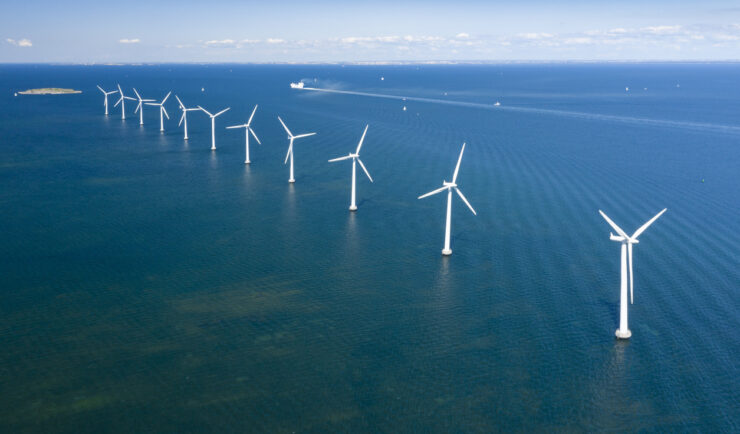
Contributing to Wind Energy Area Designations
The Bureau of Ocean Energy Management (BOEM) recently announced two Wind Energy Areas (WEAs) in the Gulf of Mexico. The WEAs are located off the coasts of Galveston, Texas, and Lake Charles, Louisiana and have the potential to power nearly three million homes. BOEM collaborated with the National Oceanic and Atmospheric Administration (NOAA) to identify…