
- Employee Spotlight, Success Stories, Uncategorized
- Safety, Health, & Environmental Compliance
Standard Guidelines for Evaluating Construction Safety and Health

Safety is of the utmost importance in new construction or renovations. CSS employee owners, supporting the National Institutes of Health (NIH) BaseLINE program helped develop and implement a proactive approach to evaluating safety and health conditions in newly constructed and renovated spaces before occupancy.
The NIH BaseLINE program, Building Assessment of Safety Elements (Base) Lighting, Indoor air quality, Noise, Ergonomics (LINE), is a systematic readiness and safety assessment survey used for newly constructed or renovated facilities. Using the BaseLine approach, industrial hygienists and safety professionals work in coordination with facility managers, engineers, and project personnel to evaluate indoor environmental quality, ventilation performance, safety systems, ergonomic conditions and overall occupancy readiness. Traditionally these surveys are completed independently rather than holistically. The collaborative nature of the BaseLine approach incorporates health and safety protections into both the physical and operational processes.
This proactive safety evaluation ensures operation avoids exposing occupants to hazards that may be construction-related but that may not have been caught until an annual inspection and therefore may not be identified as construction-related. This supports safer environments for occupants, improves operational readiness, and long-term facility performance.
For additional information view the full article, which was coauthored by the Deputy Director of NIH Division of Safety and a biocontainment engineer at NIH.
See More CSS Insights
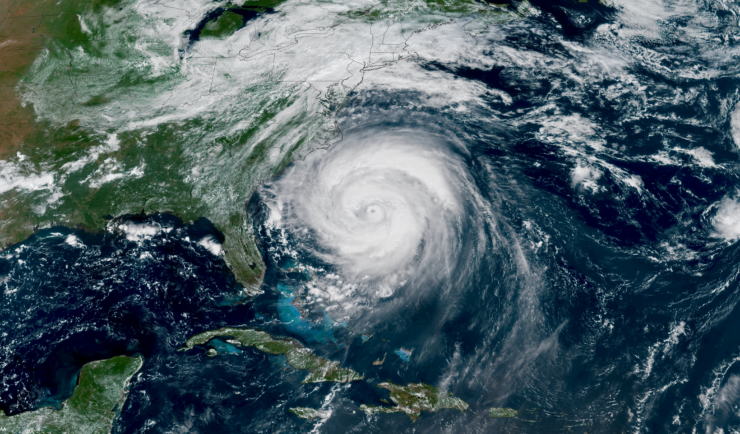
Supporting the Launch of NOAA Data to Inform More Resilient Infrastructure Designs and Structures
Congratulations to NOAA for launching their new Typical Meteorological Year product, developed by the National Centers for Environmental Information (NCEI) as part of the industry initiative. This effort helps make environmental data actionable for architects and engineers designing the next generation of resilient infrastructure. CSS is proud to support this effort and our employee owners who contributed to this product. The Typical Meteorological Year (TMY) product provides location-specific…

Advanced Planning for Hardware Retirements
NOAA relies on orbiting satellites to collect data for Climate Data Records (CDR). However, these satellites degrade over time and can be at risk of failing. Degradation or failure of critical space instruments can cause interruptions in Earth’s climate system data, disrupting the ongoing record collection. In support of NOAA’s National Centers for Environmental Information, CSS program manager for CDR proactively managed product transitions that…

Over 2000 River and Stream Samples Analyzed
Every five years teams supporting U.S. Environmental Protection Agency’s National Aquatic Resource Survey—consisting of tribal, state, and federal partners—collect samples from over 2000 river and stream reaches throughout the United States. CSS analytical chemists support this effort by processing the samples and then analyzing them for various chemicals to help characterize their water quality. The…