
- Community Spotlight, Success Stories, Uncategorized
- Environmental Resource Assessment & Management
Training Marine Mammal Programs to Use Drones to Collect Dolphin and Whale Respiratory Health Data
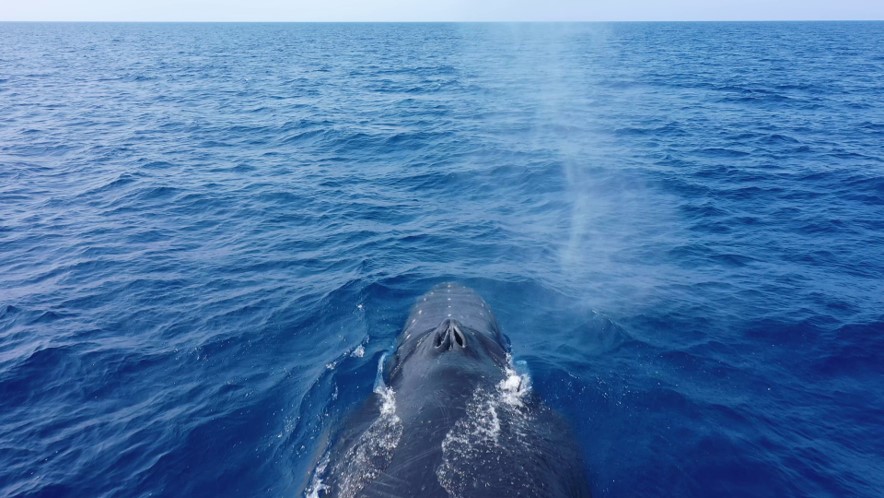
CSS employee owner and Marine Mammal Drone Specialist supports NOAA’s National Centers for Coastal Ocean Science (NCCOS) Marine Mammal Health Assessment team with collecting respiratory health data from marine mammals in local waterways. Using specialized drones equipped with petri dishes provides a non-invasive method to collect exhaled breath (i.e. blow) samples from dolphins and whales. CSS’ Marine Mammal Drone Specialist is now training other programs around the U.S. to use this method to collect exhalant from marine mammals.
Humpback Whales in Hawaii
In February 2025, CSS Marine Mammal Drone Specialist traveled to Hawaii to train the Marine Mammal Research Program at the University of Hawaii on how to collect blow samples from dolphins and whales using the drone method. For the purpose of this work, the team collected blow from humpback whales on their breeding ground off west Maui Nui for non-invasive respiratory health assessments by screening for respiratory pathogens such as morbillivirus and Brucella, which may have the potential to transfer to humans.

The team will also use these samples to assess the respiratory microbiome from each whale. This is important because the bacterial communities that reside within the humpback whale respiratory tract play an important role in immune health and pathogen resistance. Since marine mammals are indicators of ocean health, and the respiratory system is a key health indicator for whales, detecting respiratory pathogens in free-ranging whales will help determine how prevalent respiratory diseases are in the population during reproduction and birthing–a time when they are at their most vulnerable.
While the Marine Mammal Research Program frequently uses drones in their research projects, they were unsure how best to fit their drone for blow collection. They asked NCCOS for help regarding the best drone setup, flight techniques for blow collection, and sample processing and storage techniques. Scientists can also use blow samples in a variety of other ways to assess whale health, including quantifying hormones, determining sex, and estimating gene expression. Therefore, the Marine Mammal Research Program’s future humpback whale research projects will be greatly enhanced by the health data obtained using this methodology.
Killer Whales in Washington
In September 2024, CSS Marine Mammal Drone Specialist collaborated with NOAA’s Northwest Fisheries Science Center, the San Diego Zoo Wildlife Alliance, and the SeaDoc Society to help collect blow using drones from the critically endangered southern resident killer whale population in the San Juan Islands. Scientists are trying to monitor the health of this highly vulnerable population, but are interested in exploring a variety of minimally invasive methods so as to not cause unnecessary stress. The petri dish-mounted drone is a novel approach to using noninvasive techniques while inducing minimal stress on the animals, but that has great potential for enhancing understanding of their health.

With the critically endangered status of the species, collecting individual and population health data with little disturbance to the highly vulnerable population was incredibly important. The team successfully collected numerous blow samples from killer whales and one from a humpback whale while testing this method. Ongoing laboratory analyses will help determine what respiratory health information can be obtained from these samples and if this method will be utilized as a health diagnostic tool moving forward.
See More CSS Insights

Advanced Planning for Hardware Retirements
NOAA relies on orbiting satellites to collect data for Climate Data Records (CDR). However, these satellites degrade over time and can be at risk of failing. Degradation or failure of critical space instruments can cause interruptions in Earth’s climate system data, disrupting the ongoing record collection. In support of NOAA’s National Centers for Environmental Information, CSS program manager for CDR proactively managed product transitions that…

Developing a Stream Assessment Protocol
CSS has been a significant contributor to the development and implementation of the Oregon Stream Function Assessment Method (SFAM) for more than 10 years. SFAM is a key component of the Oregon Stream Mitigation Program administered by the Oregon Department of State Lands. The mitigation program is designed to address damage to aquatic resources caused…
Quality Assurance Audit Reports
Since 1985 we’ve supported the National Institute of Environmental Health Sciences and have provided more than 1,600 quality assurance audit reports that the client has used to assess the quality of toxicology studies they sponsor. Over the last year our employee owners reviewed several studies involving per- and polyfluorinated substances (PFAS) compounds, or “forever chemicals”,…